
Why Your Congregation Keeps Reverting to the Same Patterns

Do you remember what you preached about three Sundays ago?
Next question: What’s actually different in your congregation because of that sermon?
Sunday’s Shelf Life
Here’s what I think is one of the better scenarios for most churches.
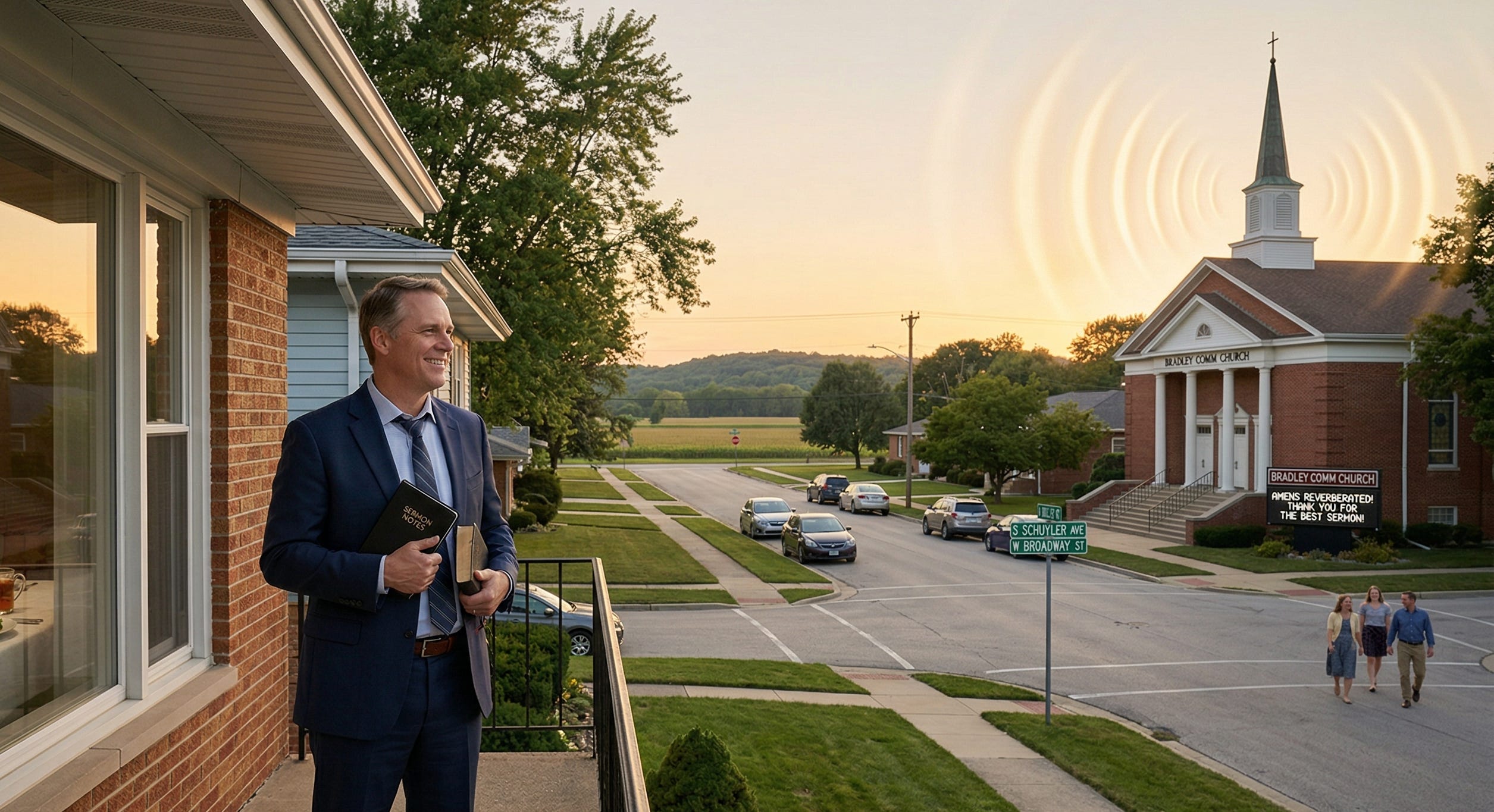
Your sermon landed! The congregation nodded enthusiastically along. Some of them took notes. “Amens!” reverberated across the sanctuary. A few told you afterward it was the best sermon you’ve given in months. You sat down to Sunday dinner feeling good!
Then Monday arrived.
By Wednesday, the same people were anxious about the same things. The same interpersonal dynamics resurfaced at the board meeting. The same political drama. The same assumptions about money, success, and safety were running the show.
It’s as if Sunday never happened.
What We Keep Expecting Preaching to Do
If you’ve been in ministry for any length of time, you’ve watched this cycle. Preach, teach, study, discuss. There’s some brief movement, and then reversion. The congregation snaps back to its default settings like a rubber band pulled and released. And, when you stop for some self-analysis, you probably recognize that you snap back too. We all do.
This is one of the frustrating things about ministerial preparation. We keep creating these unrealistic expectations that sermons and liturgies are magical. They’ll magically change everyone if we just get them right. Then we get frustrated and start to burn out when we begin to recognize the truth that our sermons don’t actually change most people.
I got into teaching because I wanted to get to the bottom of things like this. I wanted to understand what was going on. There are so many social media posts complaining about stuff like this. I don’t want to be another one of those posts. So, here goes.
Conceptual Formation
In the last two newsletters I named what I think are two pieces of this puzzle. First, every congregation carries an operative theology underneath its stated theology, a set of instincts and assumptions that were formed long before you, the pastor, arrived. This operative theology is what runs the show when pressure hits.
Second, most of our discipleship efforts confuse information with formation, assuming that better content will produce deeper change.
But there’s something more that I think we still have to address.
Your congregation makes sense of everything through patterns of meaning they’ve been absorbing from infancy. Every person in your church carries a set of concepts, built over a lifetime, that function like a filter for everything they encounter. When they hear a sermon about generosity, they process it through a concept of money they picked up from their parents, their financial anxieties, and decades of consumer advertising. When you teach about forgiveness, it runs through concepts of justice and fairness that were formed by talk radio, social media, and whatever version of “standing up for yourself” or “boundaries” that the culture handed them.
This is what I call conceptual formation. It sounds a bit abstract, but it just means that we don’t receive ideas in a vacuum. We receive them through the conceptual equipment we already have. And that equipment was built across a lifetime by forces that had nothing to do with the gospel.
Think of it this way. A first-century Jew hearing about Jesus for the first time would make sense of Jesus through available concepts: “Messiah” or perhaps the Stoic idea of “the Logos.” A twenty-first-century American hearing about Jesus connects him to concepts of therapy, personal fulfillment, political identity, militant masculinity, or maybe a vague spiritual warmth. Whatever concept we use to make sense of Jesus shapes the Jesus we end up with. And then that Jesus shapes us in return, but only within the limits of the concept that we started with.
Same Conceptual Operating System
This is why your congregation reverts. The sermon lands on Sunday, and it’s sincerely and earnestly received. But it lands inside a conceptual world that was built by other forces. By Monday, the older and deeper patterns are already reasserting themselves because they were never actually displaced. New information entered the system. The system itself didn’t change. It finds ways to re-interpret the new information.
The early church seemed to understand this. Paul didn’t just hand the Corinthians better ideas. He called them into a different pattern of life together: eating differently, sharing resources, reordering their relationships across social boundaries. He was after the concepts that operate underneath, not just the conclusions on top.
The problem today is that the methods used in the early Church now seem “progressive” and “woke,” because even in our conservative, evangelical churches we are still formed by outside concepts and forces. Shoot, when I teach about John Wesley, Wesley now seems “woke.” We have to scapegoat progressives to avoid noticing what’s happening within ourselves. Pointing out the spec of sawdust in the liberal eye to avoid noticing the plank in our conservative eye.
The Diagnostic Question
The gospel keeps getting translated into a language that was never designed to carry it. So, the diagnostic question for your congregation is this: What concepts are your people actually using to make sense of Jesus, salvation, the church, and the Christian life? And where did those concepts come from?
If this post resonated with you and you’ve done some reflection on it, I’d like to know what is one of the concepts you’ve seen your congregation use to “domesticate the gospel”? Where do you think that concept came from?
Next week I want to look at what happens when fear takes over, because fear is one of the fastest ways to see which concepts are really running your congregation.